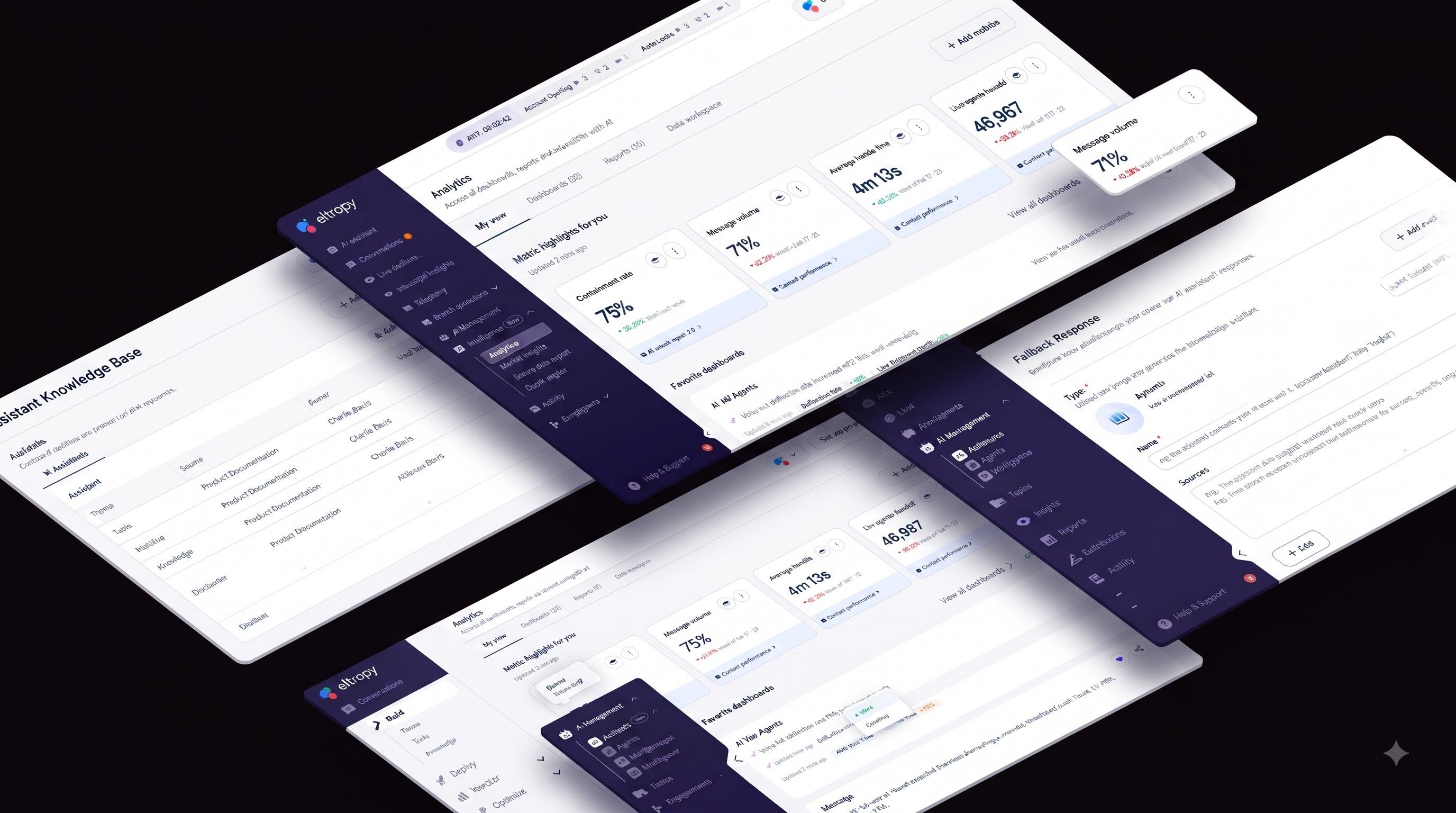

Eltropy Fintech SAAS platform
Increase adoption of AI Assistants to improve efficiency of credit union staff.
MY ROLE:
As design lead and product owner for AI Assistants and Agents, I set the strategy and led the team
Leading strategy and the team
Defined the UX strategy and project plan, shifting the team from feature-driven releases to outcome-driven discovery.
Guided research planning, recruiting, user interviews, and synthesis, and brought customer feedback directly into the product roadmap. Set up stakeholder interviews, design sprint workshops, and support-ticket and drop-off analysis, with AI tools used to move fast through each stage of the double diamond.
Led design critiques and mentored two designers to raise the quality bar across the product.
Led the overhaul of a four-year-old design system, which reduced feature time-to-development by 21%.
Hands-on design
Designed the new information architecture for creating AI Assistants, using progressive disclosure to keep frequent settings upfront and reduce dependency on implementation managers.
Shaped the new analytics experience
ABOUT THE COMPANY:
Eltropy's conversations platform helps credit unions and community banks talk to their members but the AI Assistants and Agents built into it were going largely unused. I led design and UX strategy to change that: rethinking how the feature was surfaced, understood, and trusted by frontline teams, and building the visual system now used across the rest of the product.
ABOUT THE TEAM:
I joined Eltropy in November 2024 to lead design on Assistants and Agents adoption, working with 2 designers, a cross-functional team of 3 product managers, 1 engineering manager. Over an 18-month engagement, the mandate expanded from a single feature push into re-designing key user flows with design system overhaul and eventually growing the design org.
MY STRATEGY:
Eltropy had entered the AI space early, but end-user adoption of the new technology remained low. When I joined in November 2024, the product organization was in a "growth-at-all-costs" phase — the team had successfully broken into the market, but design and product processes hadn't scaled to match.
My role was to stabilise the product through quick wins while architecting a longer-term strategy for scale. I followed the below steps:
Get Users voice in the product:
I started with introducing a problem and solution discovery sprint.
First step was to understand the space by talking to stakeholders, end users, studying competitors, and running design sprint workshops. We had very limited usage analytics available but I analysed data from support tickets, and key drop off points in the journey to identify insights. We presented this problem space to the stakeholders to get the buy in to improve this journey. I extensively leveraged AI tools to adopt the double diamond process to bring discovery at the heart of roadmap without losing speed.
Core business problem statement:
How might we reduce the time it takes a credit union to launch a new AI Assistant/ AI agent? How might we empower end users to update an AI Assistant/Agent themselves? How might we help credit union staff to measure the value an assistant is delivering?
Old experience of creating AI Assistants:
Translate findings to create design mockups
The design team worked to translate those findings into a scalable, modular interface validating with qualitative feedback before release. The team created quick mockups with AI to validate with end users. This helped us test different approaches before finalising the one we could send to engineering.
The bigger shift was moving the team from feature-driven releases to outcome-driven discovery, bringing user feedback directly into the product roadmap. This required a complete shift in how the product organisation functioned. Changing in design is less expensive
THE SOLUTION:
STEP 1: A new information architecture to create an AI Assistant
This helped reduce time to create a new assistant and dependency on the implementation manager. Used the principle of progressive disclosure to display frequently used settings upfront and hide the less used settings to reduce cognitive load.
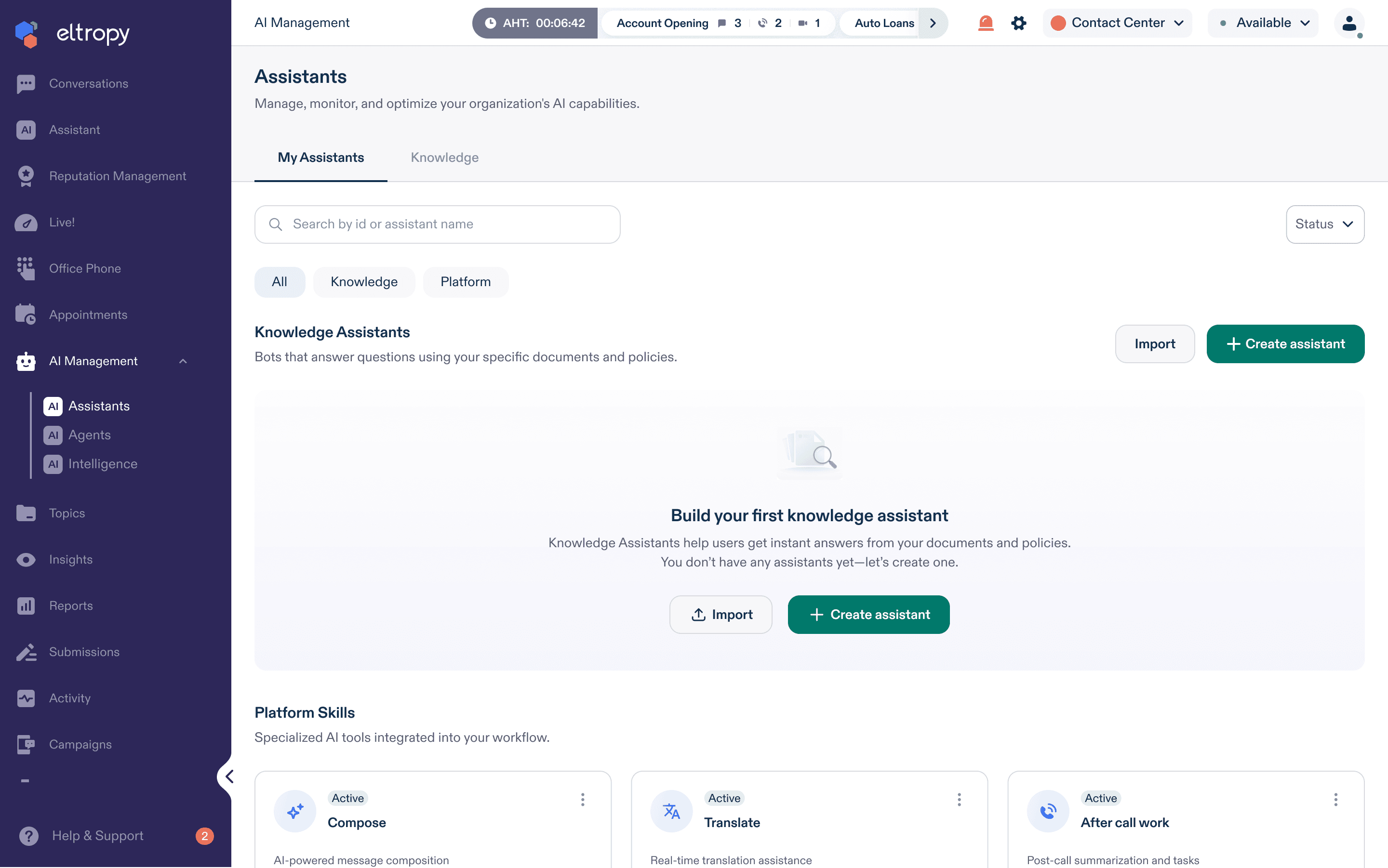
Empty state of AI assitants
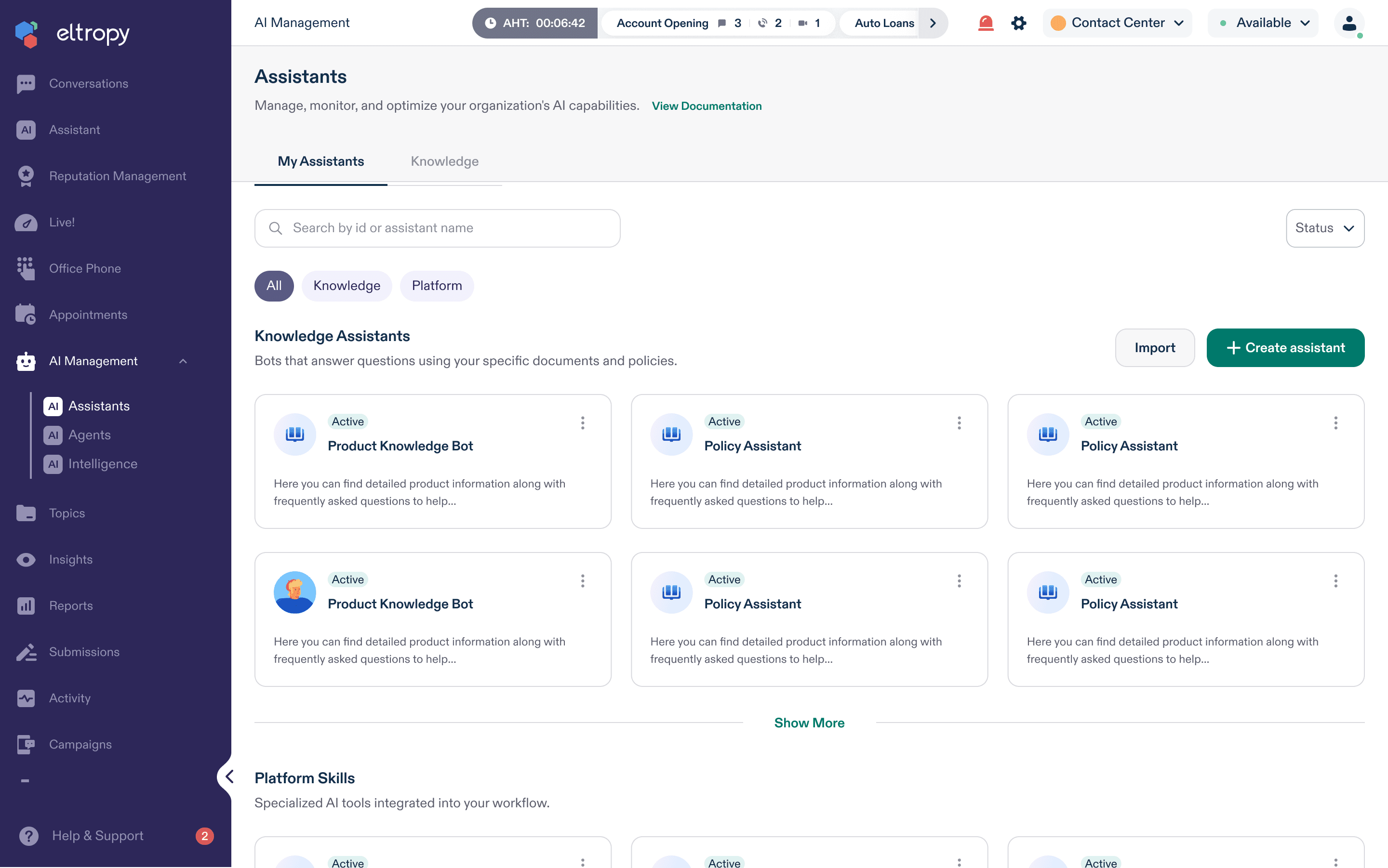
All knowledge assistants filtered by category
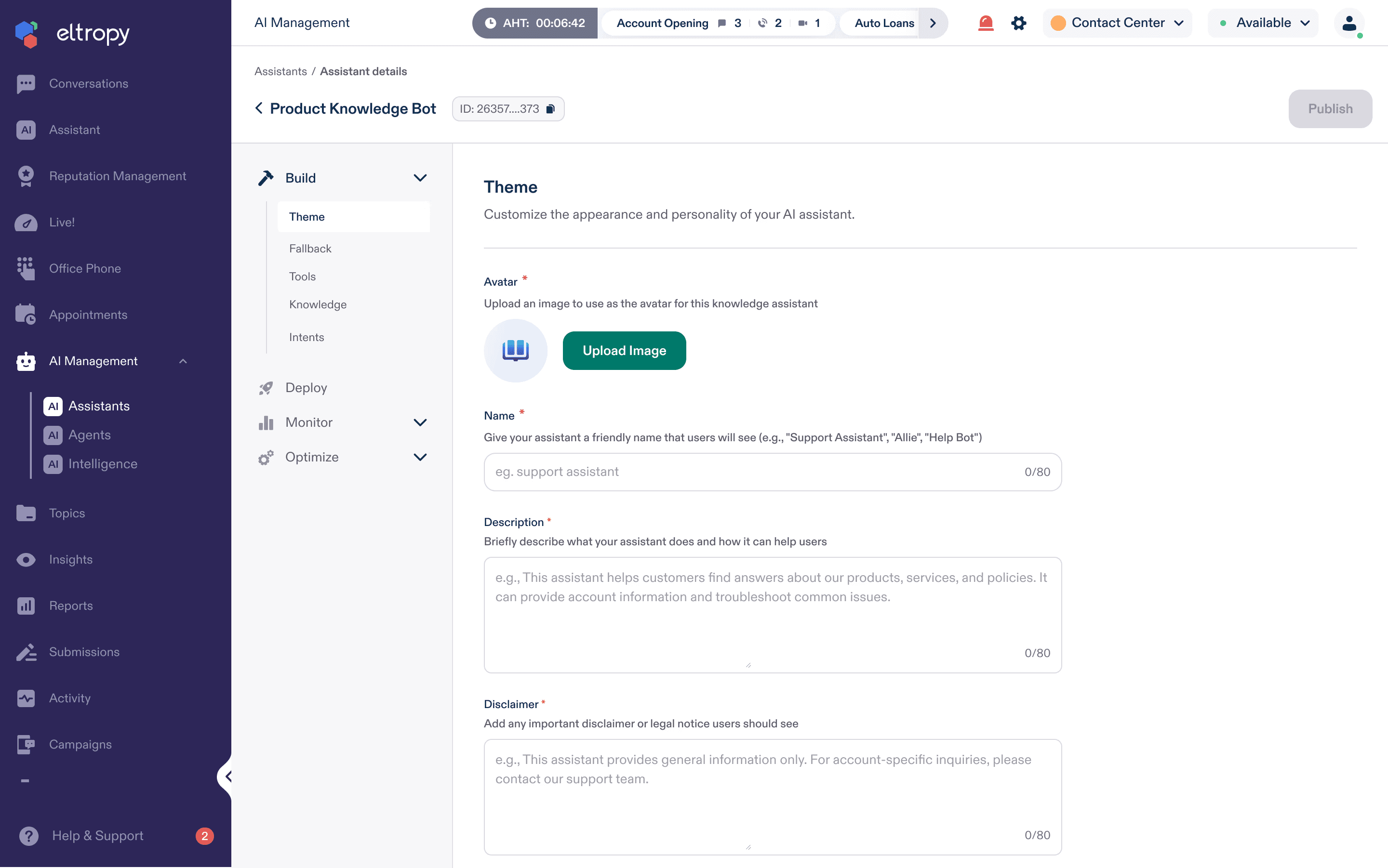
New Information architecture
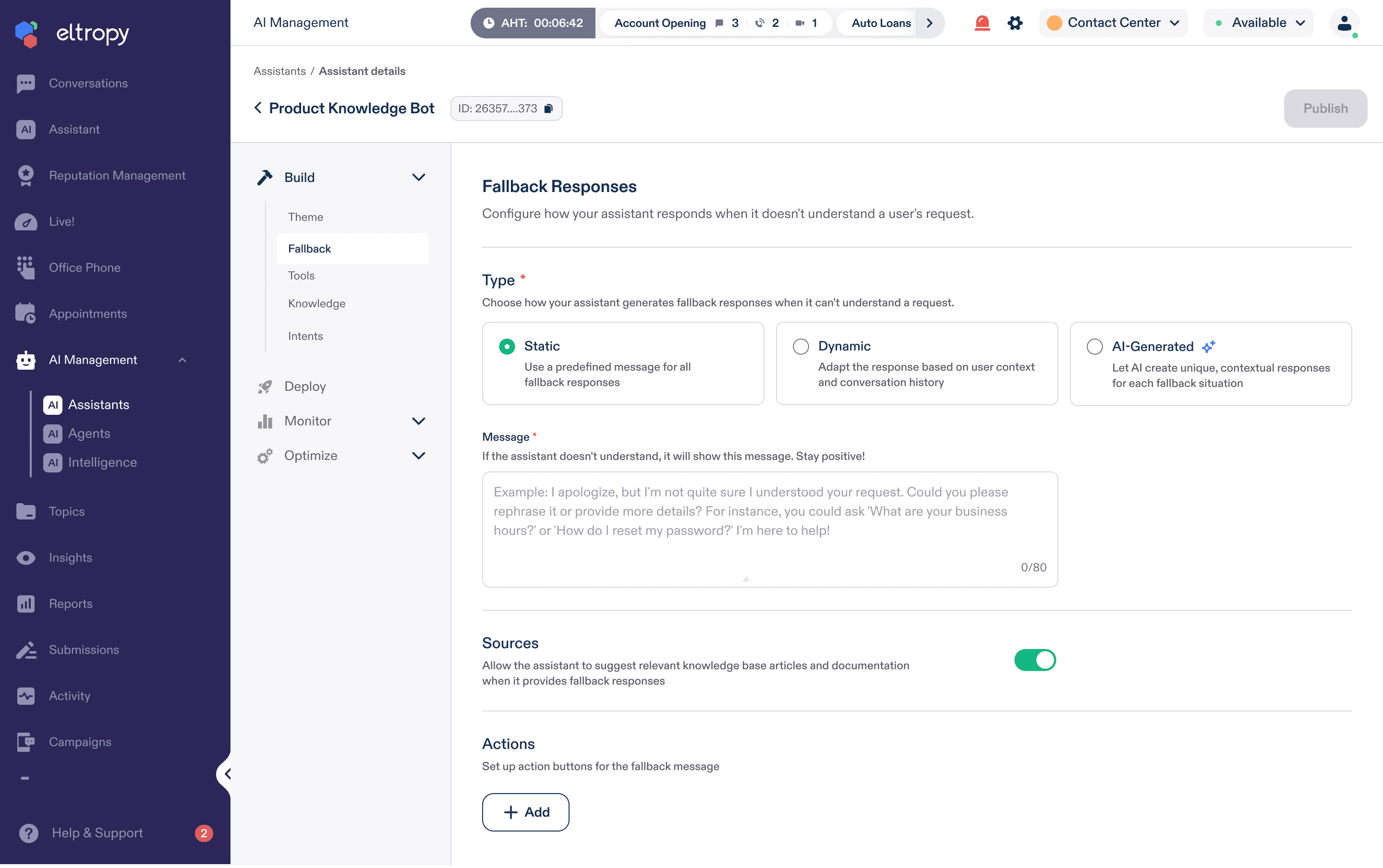
Different types of fallback to solve for edge cases
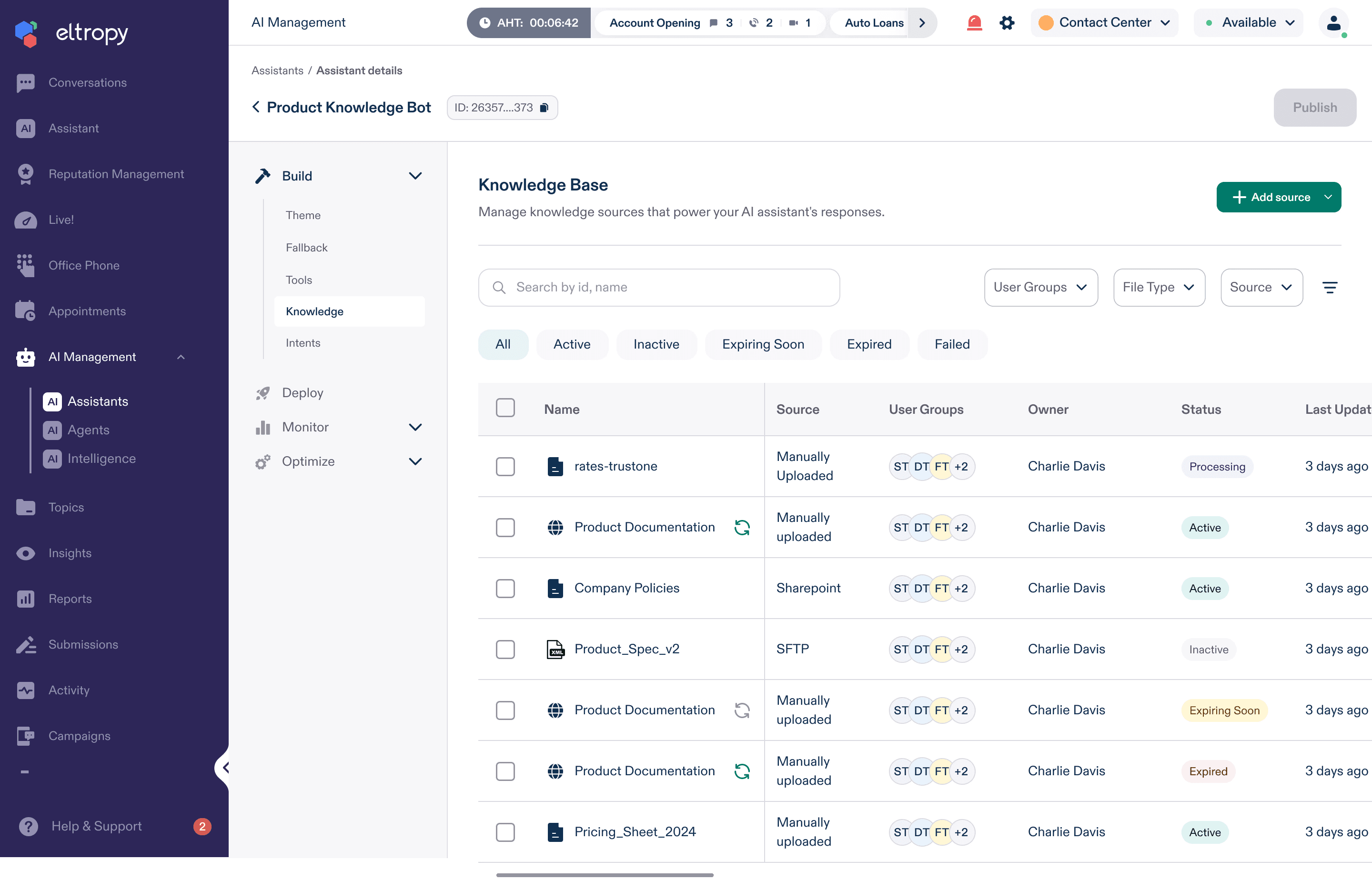
Centralised knowledge system to reduce the number of updates for a user
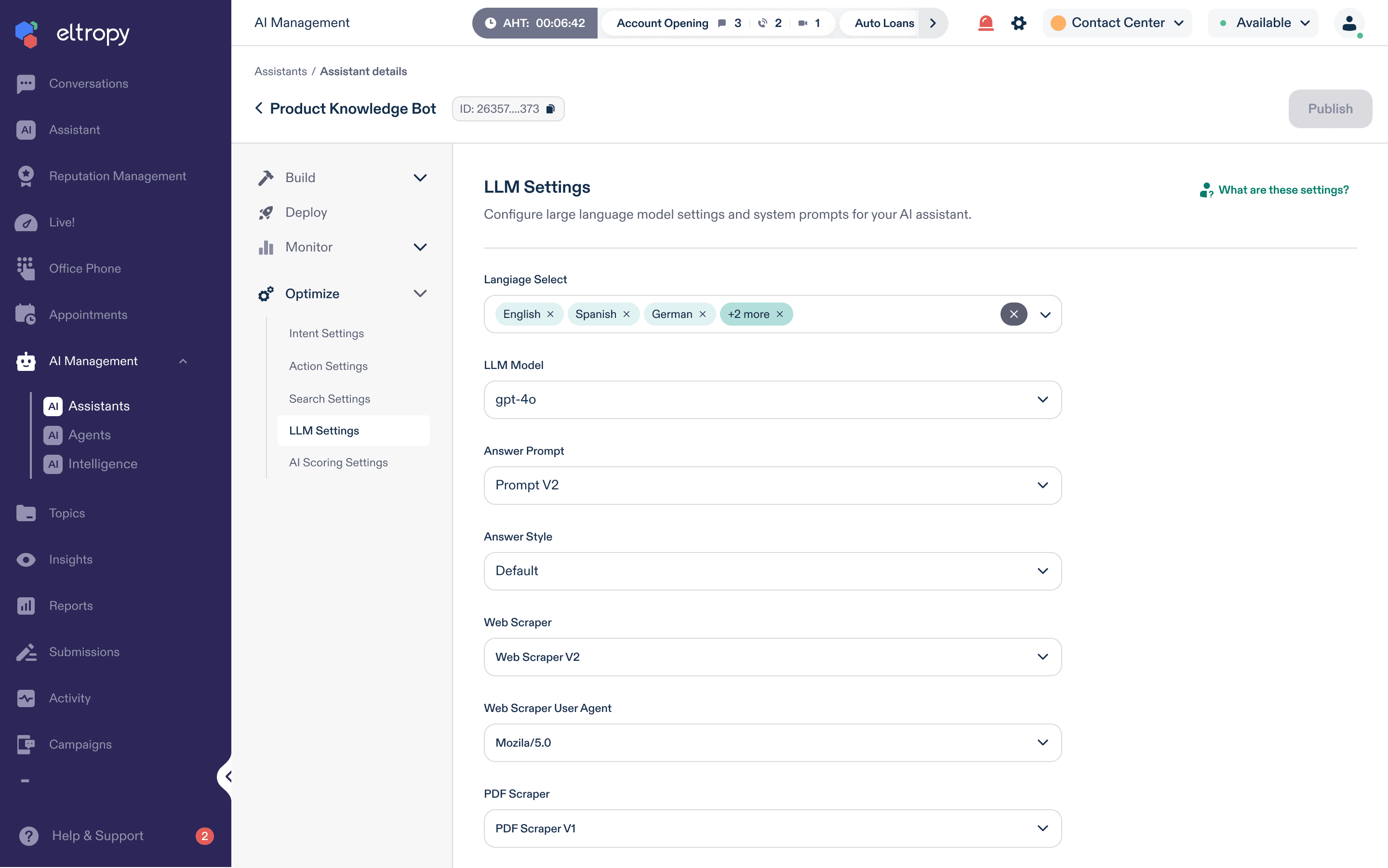
Used progressive disclosure to group less used settings at the end
Step 2: Integrated AI Assistant within Analytics & Reporting
The AI Assistant helped make sense of complex data instantly. The user would be able to create custom dashboard, metrics and understand metric definitions to take data driven business decisions.

Onboarding to create a personalised experience

Metric definitions to build trust on data

A new analytics homepage with relevant data upfront, metric definitions to build trust on data

AI Assistant integrated within Analytics to provide quick insights

Ability to dive deep using AI Assistant to understand the details of a metric

Custom dashboards with clear hierarchy
IMPACT:
1. Ready to test, launch and learn
The new settings experience was released for all 200 customers.After doing an initial analyses on usage, the number of daily users increased by 75% from 2,000 to 3,500. This change in how we built Assistants and utilise it within the product brought in more modularity which would then be translated to AI voice and chat agents as well. The new analytics and reporting experience was launched in alpha stage with 5 customers only.
Questions for next round of testing of Analytics and reporting:
How do we scale analytics and reporting to make sure that Eltropy becomes the source of truth across all communication channels
How do we handle AI hallucinations when it comes to data problems
2. Insights from customer research informed the go-to-market strategy and other teams’ work
Including users voice early empowered the product team to take more confident decisions and help iterate on the designs quickly.
3. Improved visual design system
Since these changes required re-building the entire UI, this gave us an opportunity to update the 4 year old Eltropy's design system. This reduced feature time-to-development by 21% and was a crucial step to reduce design debt as the design team increased in number.